Our Minneapolis front desk is closed Fridays, but phone lines remain open 9:30–11:45 a.m.
Media ContactLisa Ramirez, Communications Director, lramirez@mylegalaid.org
Hundreds of Minnesota refugees may be affected by recent termination notices. Managing Attorney Danielle Hendrickson says the reviews often focus on minor discrepancies in decades-old interviews and raise concerns about fair and consistent decision-making.
E. Michelle Drake and her law firm, Berger Montague, were so moved by the ill-effects of Operation Metro Surge and Operation PARRIS, they dropped everything. Current caseloads were cast aside so they could petition the court to lawfully save neighbors from detention. She’ll tell that story in St. Cloud as Legal Aid’s Access to Justice keynote speaker. Until then, the Super Lawyers publication shares her backstory, revealing what makes this lawyer extraordinaire tick.
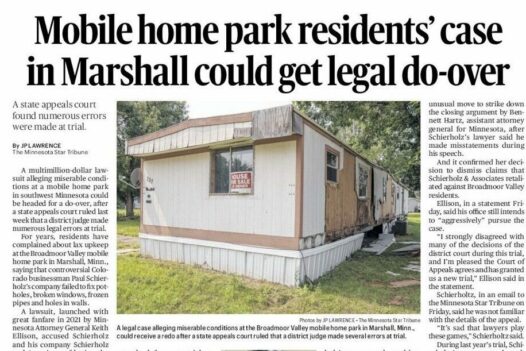
Twists and turns in court case brought by Minnesota Attorney General’s office is not over. Legal Aid Litigation Director Luke Grundman, who first represented clients of a mobile home park, similar to that pictured here, weighs in.
Managers for a 55-and-older St. Louis Park apartment building are adding utility charges to rent that may put tenants with limited income into dire straits. Attorney Gary Van Winkle warns, because these charges come from a third-party biller, they’re at greater risk for eviction.
A jury determined Chadwick Banken, a real estate broker, violated Minnesota’s Human Rights Act, targeting Muslim homebuyers. Legal Aid Attorney Mary Kaczorek represents homeowners in the same situation and says it’s frustrating to see how families were misled and lost both their homes and significant financial investments.
[Update: Facility will reopen] Director Eren Sutherland of the Minnesota Disability Law Center explains what it means when one of
WCCO-TV revisited clients represented by Melissa Hortman back in 1997. As noted in the story, Hortman began her legal career at a “local legal aid office.” That office is Mid-Minnesota Legal Aid.
The podcast North Star Stories spoke with Attorney Jessica Webster about the impact of seclusion — the practice of isolating children with disabilities away from their classmates during the school day. Currently banned, the practice is being reconsidered under a proposed law permitting seclusion for students in grades K-3 through 2036.
Fines and threats of foreclosure by homeowner associations are expected to be curbed thanks to the newly passed “HOA Bill of Rights.” Approved with bipartisan support, this legislation provides consumer protections championed by Legal Aid Attorneys Ron Elwood and Colleen Daly.
Browse, download or request our brochures and guides.